Most Famous Talking Parrot Species
Parrots possess strong learning abilities and can mimic sounds and words, often to attract attention from their owners or companions—this is what we mean by parrots talking. However, the ability to speak varies significantly between species, and not all individuals within the same species can talk.
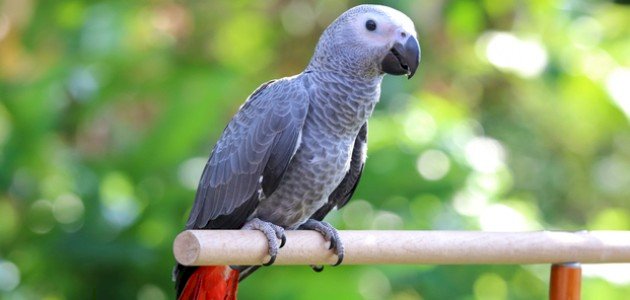
African Grey Parrot
The African Grey Parrot (scientific name: African Grey Parrot) is also known as the Cameroon parrot or Ghana parrot. It is widely recognized as the most intelligent bird species in terms of speech capability, capable of speaking around 200 words. Some individuals can learn up to 500 words, and with intensive training, some may reach as high as 1,000 words.
The average lifespan of an African Grey Parrot ranges from 40 to 50 years, and they typically do not begin speaking until after one year of age. Among its subspecies, the Congo African Grey and the Timneh African Grey are particularly noted for their exceptional talking skills.
The Congo African Grey is the most popular, largest in size, and has the best speaking ability. In contrast, the Timneh African Grey is smaller, less vocal, but more affordable and capable of speaking at a younger age.
Amazon Parrot
The Amazon Parrot (scientific name: Amazon Parrot) ranks among the world’s finest talking parrots. Known for being energetic, assertive, and sometimes aggressive toward others, it can speak between 100 and 120 words. Some individuals can even form complete sentences, and their speech is remarkably clear—often clearer than that of the African Grey. However, their loud calls can be disruptive.
The average lifespan of an Amazon Parrot is about 70 years. There are several varieties, including the Yellow-crested Amazon, the Double-yellow-headed Amazon, the Orange-winged Amazon, the Blue-fronted Amazon, and the Yellow-billed Amazon, which is considered the most talkative among them.
Quaker Parrot
The Quaker Parrot, also known as the Cockatoo Parakeet, is a small to medium-sized bird known for its playful nature, energy, and intelligence. It is emotionally sensitive, and its behavior toward people can vary depending on its mood. The average lifespan is 20 to 30 years.
Quaker Parrots can speak between 40 and 100 words. When in a good mood, they may chatter and screech for extended periods. Despite their small size, they are quite noisy and can become aggressive if their feathers are pulled. They are also prone to pancreatic issues and obesity.
Ring-Necked Parakeet
The Ring-Necked Parakeet, also called the Indian Ring-necked Parakeet or the Collared Parakeet, is one of the best talking parrots, highly common, and relatively inexpensive. It can speak between 100 and 130 words.
The average lifespan is around 30 years. This species is intelligent, calm in temperament, and easy to train. It is one of the most prolific breeding parrots in the Northern Hemisphere, originally native to Africa and South Asia. It is often found in large flocks numbering in the hundreds, nesting in tree holes in parks and gardens across Southeast England and southern and western London.
Its diet includes seeds, berries, nuts, and fruits. It has bright green plumage, a long, slender tail, and a pale red beak. Males have black feathers around the throat and a thin band of pink and black on the neck.
Eclectus Parrot
The Eclectus Parrot is a medium-sized bird with an average lifespan of 30 years. It is a good speaker, capable of learning around 100 to 120 words. Though generally less lively and active than other parrots, it tends to be noisy and can be disruptive.
It features a large head and short tail. Males are mostly light green with red underwings, while females are vividly red with purple underbellies and red underwings.
Eclectus Parrots are found in northern forests of Cape York Peninsula and lowland rainforests in New Guinea. They prefer flying above the canopy and produce loud, resonant calls.
Budgerigar
The Budgerigar holds the Guinness World Record for having the largest vocabulary among birds. These small parrots excel at learning many words and phrases and can continuously expand their vocabulary. However, their voices are often soft and difficult to understand clearly.
A famous budgerigar named Puck reportedly spoke 1,728 words before passing away in 1994. Another well-known bird, Oskar, spoke 148 words and held the record for the highest vocabulary among living birds. Most budgerigars can speak between 120 and 500 words.
The average lifespan is about 10 years, though some well-cared-for individuals may live up to 18 years. A diet consisting solely of seeds limits their life expectancy to just 3–4 years.
Macaw
Macaws have moderate speaking abilities, typically learning 30 to 50 words. They are energetic, intelligent, and extremely loud, requiring firm training and consistent handling to become suitable pets.
The average lifespan is about 50 years. The term 'macaw' refers to 18 different species of large parrots known for their long tails and vibrant colors. They are native to tropical regions of North and South America and are among the most striking parrot species worldwide.
Cockatoo
Cockatoos have a moderate ability to speak, usually managing only 10 to 30 words. Not all individuals can speak, and their voices are exceptionally loud—they are known to have the loudest call among all parrots, making them unsuitable for indoor living.
They are affectionate, bold, and intelligent, enjoying physical contact and staying close to their owners and other birds. They are famously known as escape artists due to their remarkable ability to open cages and fly away.
Cockatoos are divided into three main types: the Galah, also known as the Pink-breasted Parrot (average lifespan: 40 years), the Sulphur-crested Cockatoo (average lifespan: 30 years), and the Long-billed Cockatoo (average lifespan: 50 years).
Derbyan Parakeet
The Derbyan Parakeet, also called the Derbyian Parakeet, is one of the largest and rarest parrot species in the world, rarely seen in the wild. It is roughly twice the size of a Ring-Necked Parakeet and has a moderate speaking ability, capable of learning about 20 to 40 words.
Its average lifespan is 20 to 30 years. It is naturally loud and energetic, making training challenging. It requires extensive socialization and interaction to thrive. Both males and females look similar, but males have an orange-red beak, while females have a black beak.
References
- ^ 1 2 3 4 5 6 7 8 9 10 11 12 13 14 15 16 SHERRY HAYNES (21/5/2021), "Top 10 Best Talking Parrots", Pet Helpful, Retrieved 23/11/2021. Edited.
- ↑ SHERRY HAYNES (21/5/2021), "Top 10 Best Talking Parrots", Pet Helpful, Retrieved 23/11/2021. Edited.
- ↑ SHERRY HAYNES (21/5/2021), "Top 10 Best Talking Parrots", Pet Helpful, Retrieved 23/11/2021. Edited.
- ↑ SHERRY HAYNES (21/5/2021), "Top 10 Best Talking Parrots", Pet Helpful, Retrieved 23/11/2021. Edited.
- ^ 1 2 "Ring-necked parakeet", Essex Wildlife Trust, Retrieved 23/11/2021. Edited.
- ^ 1 2 "Eclectus Parrot", eBird, Retrieved 23/11/2021. Edited.
- ^ 1 2 SHERRY HAYNES (21/5/2021), "Top 10 Best Talking Parrots", pethelpful, Retrieved 25/11/2021. Edited.
- ↑ "macaw", Britannica, Retrieved 23/11/2021. Edited.